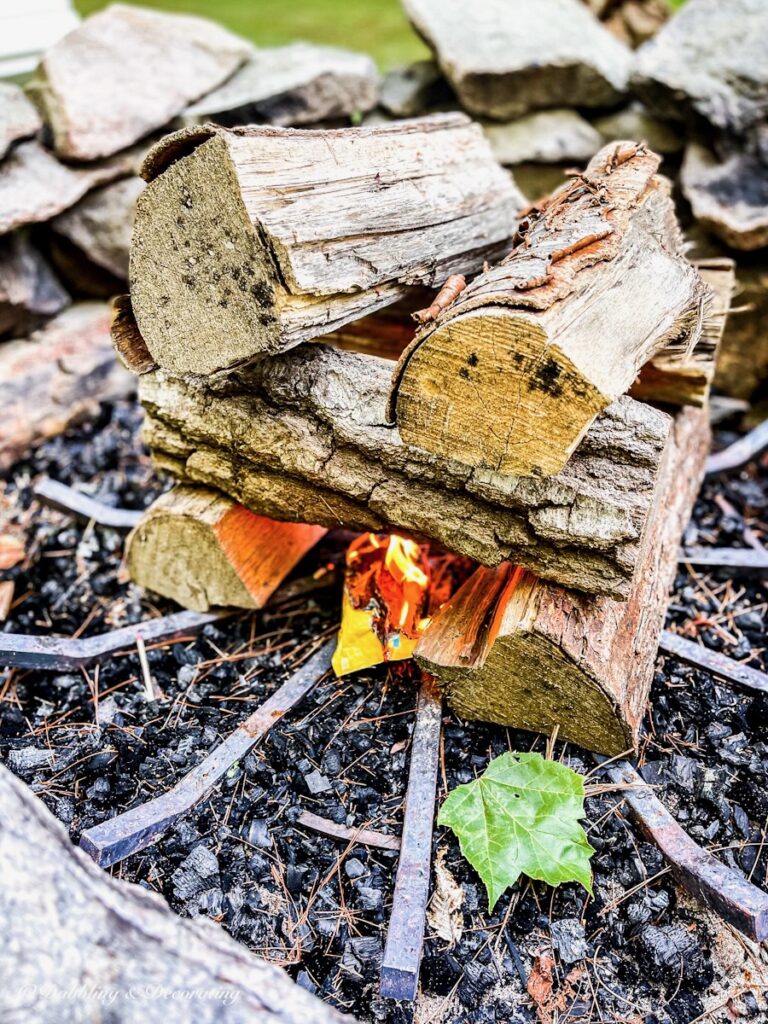
Solo Stove vs. Tiki Brand Fire Pit: Which Wins?
Both brands promise a smokeless fire, but they take very different approaches to getting there. Solo Stove uses a double-wall airflow design that burns wood so efficiently it leaves almost no smoke. Tiki Brand runs on their propane-free Clean Burn technology with a similar secondary combustion concept, but at a lower price point.
The real question is not which one looks better on Instagram. It's which one you'll actually want to use on a Tuesday night when it's 58 degrees out. After spending time with both brands across different backyard sizes and group settings, here's what you actually need to know.
One important note: smokeless means dramatically less smoke than a traditional fire pit, not zero smoke. Both brands deliver on that. The differences show up in heat output, ease of cleaning, portability, and what you can actually do with them beyond burning wood.
Best for Large Backyard Gatherings: Solo Stove Yukon 2.0
The Yukon 2.0 is Solo Stove's largest fire pit, with a 27-inch diameter burn chamber that comfortably seats 10 to 12 people around it. On a 20x20 patio or an open backyard setup, this thing becomes the centerpiece. You load full-size logs, not the split kindling pieces that most smaller pits require, and the fire looks and feels like a real campfire.
The secondary burn ports around the top ring create a visible ring of blue-orange secondary flames once the fire gets fully going. Smoke output is remarkably low for a wood-burning fire of this size, and the 304 stainless steel body develops a warm patina over time. The removable ash pan makes cleanup a five-minute job.
At $549, the Yukon is a real investment. But if you regularly host groups of 6 or more and want a fire that does not drive everyone to the other side of the yard, the Yukon earns that price over just a couple of seasons.
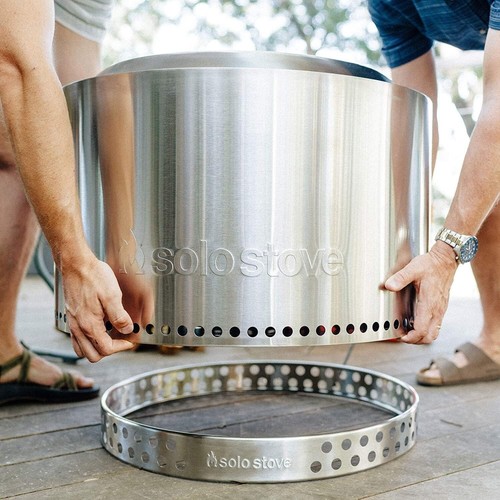
Solo Stove Yukon 2.0
$549
7,200+ reviews
Solo Stove's largest model handles full-size logs, seats 10-12 people, and runs the secondary burn system that made the brand famous.
Shop on Amazon →Tiki Brand's Best Case for Itself: The 30-Inch Clean Burn
The Tiki Brand 30-Inch Clean Burn Smokeless Fire Pit is Tiki's largest model and the one that actually competes with the Yukon 2.0 in terms of heat output and crowd capacity. For a 15x15 patio with 6 to 8 people sitting around it, this is the Tiki pit that holds its own. The wider, lower profile gives it a different feel than Solo Stove's tall cylinder design, and some people genuinely prefer it.
The entry point for adding logs is lower and wider than on the Solo Stove, which makes tending the fire a bit easier once you have a full setup. The stand lifts the bowl about 24 inches off the ground, which works well with standard patio chair seat heights. The Clean Burn secondary combustion kicks in once the fire is established and the inner walls heat up.
The price lands around $329, putting it $220 below the Yukon 2.0. For that savings, you give up some build quality and the extensive Solo Stove accessories ecosystem. But if the budget matters and you want genuine smokeless performance in a large fire pit, Tiki Brand makes a compelling argument here.
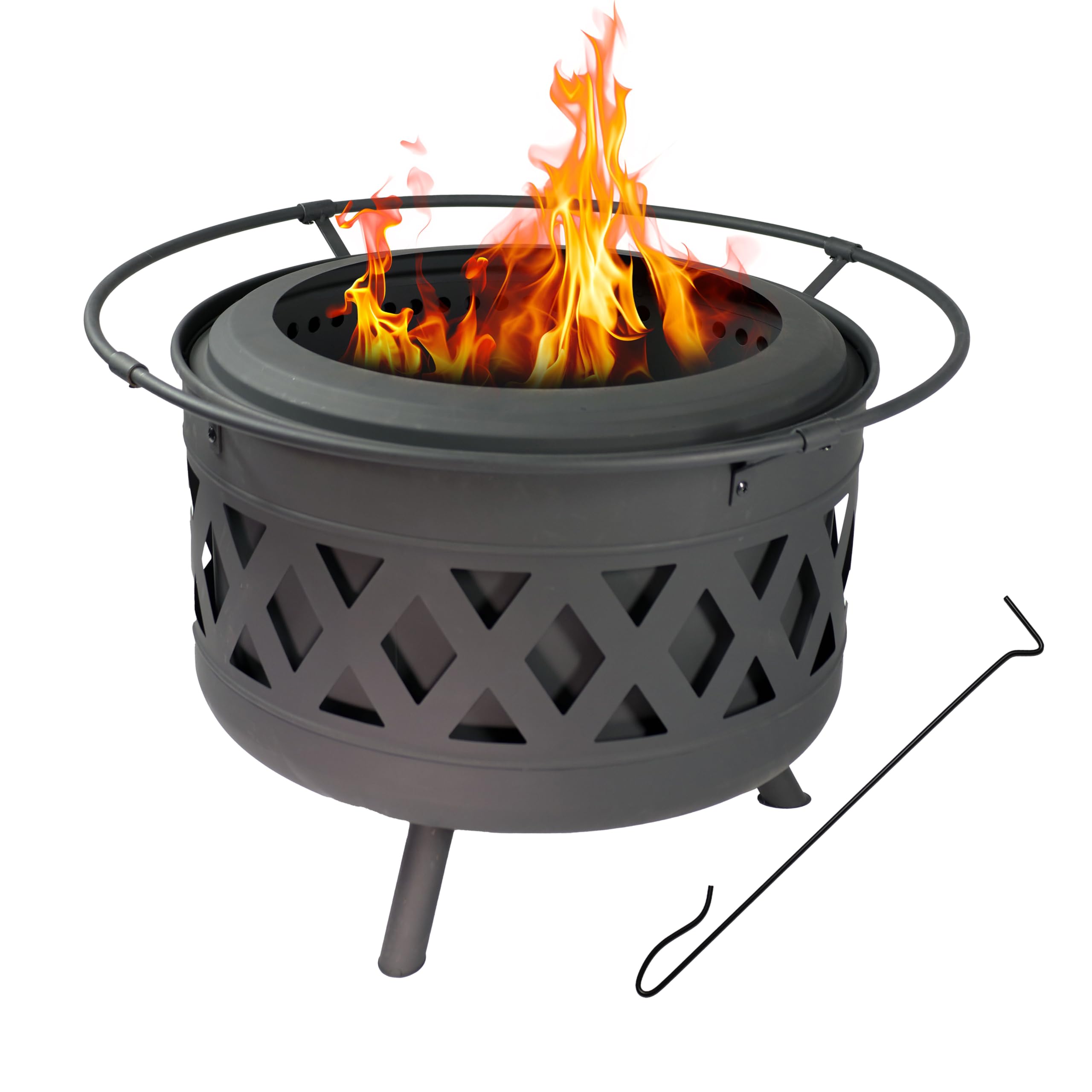
Tiki Brand 30-Inch Clean Burn Smokeless Fire Pit
$329
3,400+ reviews
Tiki's largest fire pit offers a wide, low-profile burn chamber with solid heat output at $220 less than the comparable Solo Stove.
Shop on Amazon →Solo Stove Wins Portability Outright: The Campfire
The Solo Stove Campfire is the model that built the brand's reputation. At 14 inches wide and under 7 pounds, it goes anywhere. You carry it in the included carry bag to a friend's backyard, a campsite, a beach, or just move it from the front porch to the back depending on where you want to spend the evening. No other fire pit in this comparison comes close to that flexibility.
On a small 8x10 deck or a compact patio, the Campfire is the right scale. It puts out a real, visible secondary burn flame ring and runs on standard firewood split into smaller pieces. Cleanup takes two minutes. The stainless steel holds up without any coating, so you can leave it uncovered without worrying.
Tiki Brand has no real answer to this. Their smallest standard model is still substantially heavier and larger. If portability is even a minor factor in your decision, Solo Stove wins this category without debate. The Campfire runs around $129 and goes on sale regularly.
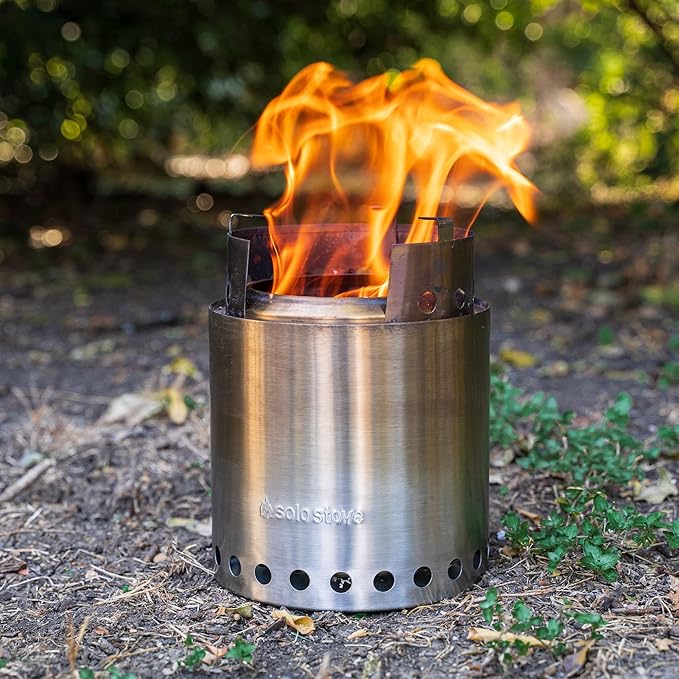
Solo Stove Campfire
$129
14,600+ reviews
At under 7 pounds with a carry bag included, the Campfire is the clear pick for small patios or anyone who wants the freedom to move their fire pit.
Shop on Amazon →The Dark Horse Worth Considering: BioLite FirePit+
If you have been going back and forth between Solo Stove and Tiki Brand and neither feels quite right, the BioLite FirePit+ deserves a serious look. It burns wood like Solo Stove does, but adds a battery-powered fan system that pushes air through the fire, giving you active control over flame height and smoke output. You dial it up for more heat, dial it down when things get smoky. No other fire pit in this space does that.
The FirePit+ also comes with an included grill grate that fits directly over the fire. For a 12x12 patio where you want one tool that handles both fire nights and quick cooking sessions, this covers both without buying extra equipment. The Bluetooth app control for the fan sounds gimmicky but turns out to be genuinely useful when you are settled into your chair and do not want to get up.
At around $199, it slots between the Tiki 30" and the Solo Stove Campfire in price. It's heavier than the Campfire but lighter than the full Tiki setup. Neither Solo Stove nor Tiki makes anything quite like it, and for people who occasionally cook over their fire, it justifies the extra cost over the Campfire pretty quickly.
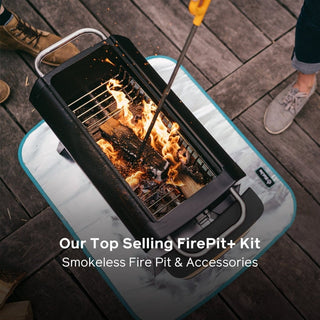
BioLite FirePit+
$199
4,800+ reviews
A battery-powered fan gives you active control over smoke and flame height, and the included grill grate means it doubles as a portable outdoor cooker.
Shop on Amazon →Quick Tips for Getting the Most Out of Your Smokeless Fire Pit
- Use dry, seasoned wood only. Both Solo Stove and Tiki Brand perform best with wood dried for at least one full season. Wet or green wood is the number one cause of smoke in any fire pit design.
- Let the secondary burn establish before adding big logs. Start with smaller pieces and let the fire heat the inner walls for 10 to 15 minutes. That's when the secondary burn kicks in and smoke drops significantly.
- Sit upwind, not downwind. No smokeless fire pit is completely immune to wind. Position your seating upwind of the pit, or add a low windbreak if your yard is exposed.
- Wait 45 minutes before touching the exterior. Stainless steel holds heat long after flames die down. Picking up a Solo Stove or Tiki pit too soon is the most common way to get burned.
- Empty ash after every session. Ash traps moisture and accelerates corrosion even on stainless steel. A quick dump after each fire adds years to the life of either brand.
- Use a fire pit mat on wood decks. Both brands radiate significant heat downward. A concrete paver or a purpose-made fire pit mat creates the buffer you need to protect the surface below.
Frequently Asked Questions
Is Solo Stove actually smokeless?
It produces dramatically less smoke than a traditional wood fire pit, but not zero smoke. Under ideal conditions with dry wood, the secondary burn reduces smoke by 80 to 90 percent. Wind and wet wood are the two things that push smoke back up.
Solo Stove or Tiki Brand, which one should I buy?
Solo Stove wins on build quality, portability options, and long-term durability. Tiki Brand wins on price, especially if you want a larger pit for less money. For most backyards with a real budget, the Solo Stove is worth the premium over several seasons of use.
Can you cook on a Solo Stove or Tiki Brand fire pit?
Both can handle cooking with aftermarket grill grates, but neither brand includes one in the base package. Solo Stove sells their own cooking accessories separately. A cast iron grate sized to the pit diameter works on either brand.
How much wood does a Solo Stove Yukon go through in a night?
Expect to burn more wood per hour than you would in a smoldering traditional fire pit. The efficient combustion process is fast and hot. For a 3 to 4 hour night, plan on a full bundle of firewood plus a little extra.
Do these fire pits work in a covered patio or pergola?
Neither brand recommends use under any permanent overhead cover. Even with reduced smoke, wood combustion produces heat and particulates that need open airflow above. A partial pergola with open sides and high clearance is a different conversation, but fully covered structures are a no.