Best Natural Gas Patio Heaters (2026)
If you already have a gas line running to your patio or outdoor kitchen, switching to a hardlined natural gas heater is one of the smartest upgrades you can make. No tanks to swap, no mid-party fuel runs, and no wondering how much propane is left.
Natural gas heaters come in two main styles: freestanding mushroom-tops that throw heat in all directions, and wall or ceiling mounted infrared units that aim heat at the people sitting below them. Both work well. The right choice depends on your patio layout and how much you want to see the heater.
The six picks below cover a range of budgets and setups, from compact freestanding units for a 12x12 covered patio to commercial-grade infrared panels that disappear into your pergola ceiling. All require a licensed plumber or gas fitter for installation, but once you have that done, these things run for years without much thought.
Best Budget Freestanding Natural Gas Heater
The AZ Patio Heaters HLDS01-GTHG is the workhorse of the natural gas heater world. It puts out 46,000 BTU from a classic stainless mushroom top, covers about a 15-foot radius, and costs less than a quarter tank of propane would over a couple of seasons. For a 12x14 uncovered patio with a small seating area, this one does the job.
It stands 88 inches tall and has a weighted base that handles light wind without wobbling. The electronic ignition lights cleanly, and the heat output is adjustable with a single knob. Nothing fancy here, which is the point. If you want reliable warmth without spending $500 and you have a gas stub already run to your patio, this is the obvious starting point.
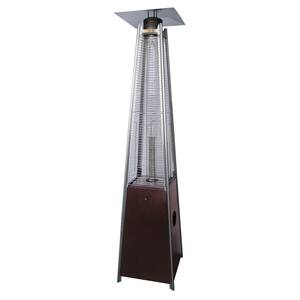
AZ Patio Heaters HLDS01-GTHG Natural Gas Patio Heater
$299
3,800+ reviews
A no-nonsense 46,000 BTU stainless mushroom heater that runs on your existing gas line and heats a 15-foot radius reliably.
Shop on Amazon →Best Wall-Mounted Infrared Heater for Covered Patios
Bromic's Tungsten 300 Smart-Heat is what you see at upscale restaurants with covered outdoor dining areas, and for good reason. It mounts flush to a wall or overhead beam, runs on natural gas, and delivers focused infrared heat directly to the people sitting below it. On a 16x20 covered pergola, one unit handles a table of six comfortably in 40-degree weather.
The Tungsten 300 looks like a piece of architectural hardware rather than a heater. It comes in black and fits cleanly against wood beams, metal frames, or brick walls. The heat feels different from a mushroom top because infrared warms objects and people directly instead of the air, which makes it noticeably more effective in breezy or partially open spaces. At around $649, it costs more upfront, but you get a heater that genuinely disappears into your patio design.
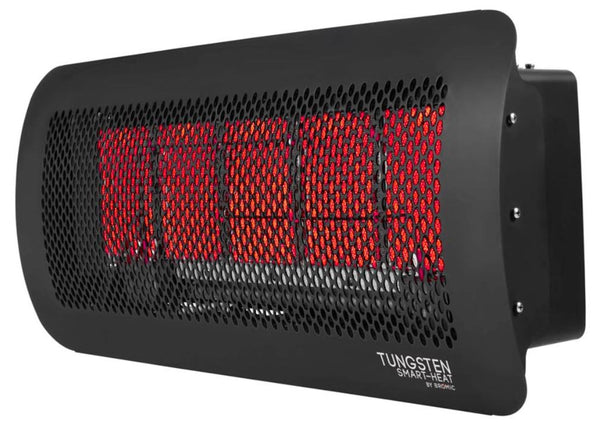
Bromic Heating Tungsten 300 Smart-Heat Natural Gas Heater
$649
1,200+ reviews
A sleek, wall-mounted infrared heater that targets heat exactly where people sit, ideal for covered patios and pergolas.
Shop on Amazon →Best Commercial-Style Freestanding Heater
Fire Sense makes a 46,000 BTU commercial patio heater in a natural gas configuration that holds up to the kind of use most residential heaters do not survive long. The hammered bronze finish looks solid on a traditional brick patio, and the unit itself is noticeably heavier than budget competitors. If you run a home bar setup, host regular backyard dinners, or want something that will last more than two seasons, this is where you spend the extra $50.
The heat output is the same as cheaper mushroom tops, but the build quality shows in the welds, the base stability, and the wheel-and-leg assembly that makes repositioning actually practical. It covers a 15-foot radius and lights reliably in temperatures down into the 30s. For an entertaining setup that sees real use from October through March, this one holds its value.
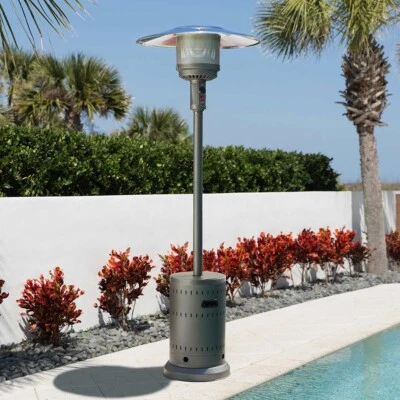
Fire Sense 46,000 BTU Natural Gas Commercial Patio Heater
$349
5,600+ reviews
A heavy-duty commercial-grade mushroom heater with a hammered bronze finish that holds up to regular outdoor entertaining season after season.
Shop on Amazon →Quick Tips for Buying a Natural Gas Patio Heater
- Hire a licensed plumber for the gas connection. Most municipalities require a permitted gas line extension. Do not skip this. A proper flex-line connection takes about an hour and gives you a safe, code-compliant setup.
- Match BTU output to your patio size. 46,000 to 48,000 BTU covers roughly a 15-foot radius in a calm environment. Open or windy patios larger than 16x16 feet benefit from a 50,000+ BTU unit or two heaters positioned at opposite ends.
- Infrared is better under pergolas and covers. Wall and ceiling mounted infrared heaters heat people directly, not the air. On partially open or breezy spaces, that difference is significant. Mushroom tops work better in calm, open areas.
- Think about sightlines before buying freestanding. A 7-foot mushroom heater planted in the middle of your patio blocks conversation across the table. Position it at the edge of the seating area or consider a wall mount if floor space is tight.
- Look for an adjustable output range, not just max BTU. On a mild October night you do not want full blast. Heaters with a wide adjustment range let you dial in the right warmth without running hot or shutting off entirely.
- Stainless and powder coat hold up better than chrome. Chrome-finished heaters look great in the showroom and corrode in two seasons. Stick with stainless steel or quality powder coat finishes for anything that lives outdoors year-round.
Best Premium Freestanding Option
Lava Heat Italia makes heaters that look like they belong in a boutique hotel courtyard, and the Opus 1 in natural gas configuration is the one worth owning. The tall cylindrical body with a glass flame viewing panel is genuinely attractive. When you have a patio where aesthetics matter as much as function, this is the heater that becomes part of the design instead of something you hide.
It runs at 58,000 BTU, which edges out most competitors and makes it effective on a larger 18x20 open patio even on cooler nights. The glass tube lets you see the flame, which adds warmth visually as well as physically. Installation requires a gas flex line run up through the base, which your plumber will handle in an hour. At $549, you are paying for looks and output, and both deliver.
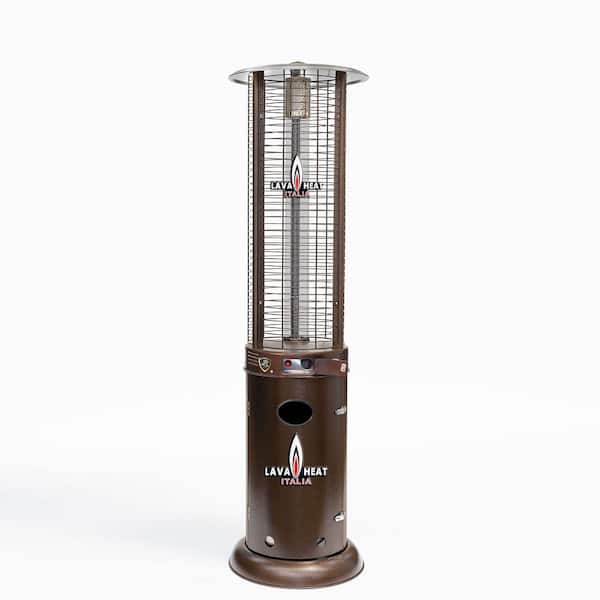
Lava Heat Italia Opus 1 Natural Gas Patio Heater
$549
890+ reviews
A 58,000 BTU cylindrical heater with a visible glass flame column that looks as good as it heats.
Shop on Amazon →Best Heater for Larger Open Patios
Napoleon's Patio Flame natural gas heater is a step up from the standard mushroom top in both output and build. It runs at 48,000 BTU, has a wide reflector dome that pushes heat outward rather than straight up, and handles an open-air patio up to 20 feet across reasonably well. The stainless finish is clean and modern without being flashy.
What sets this one apart is the stability of the base and the quality of the gas valve assembly. Napoleon builds grills and gas appliances for a living, and that experience shows in the hardware. The igniter is reliable in cold weather, the adjustment range is wider than most, and the unit feels solid when you nudge it. For a larger entertaining patio where you need consistent heat output through the season, Napoleon earns the price.
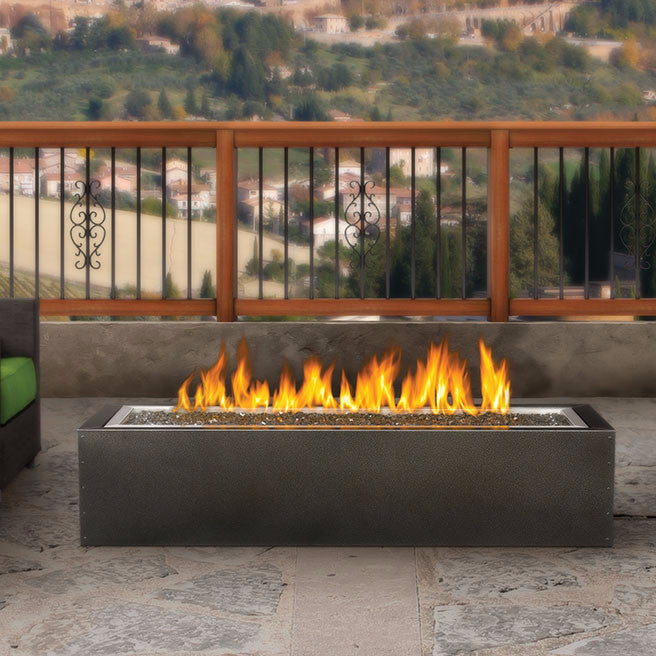
Napoleon GPFH15KT Natural Gas Patio Flame Heater
$429
2,100+ reviews
A 48,000 BTU stainless freestanding heater from a gas appliance brand that gets the valve and igniter details right.
Shop on Amazon →Best Permanent Mounted Heater for Year-Round Use
Sunglo makes heaters built for commercial and semi-permanent residential installs, and the A270 natural gas model is designed to live on your patio year-round without rusting or failing. It mounts overhead on a ceiling or wall bracket and delivers radiant heat in a focused pattern below. For a covered porch or screened outdoor room, this format works better than any freestanding unit because it does not take up floor space and you never have to move it.
The A270 runs at 50,000 BTU and is certified for both indoor and outdoor commercial use, which tells you something about the build quality. The controls mount on the unit itself or can be wired to a wall switch with the right setup. On a 14x16 covered patio, one unit keeps a group of four or five people warm well into November in most climates. It is not the prettiest heater on this list, but it is one of the most practical.
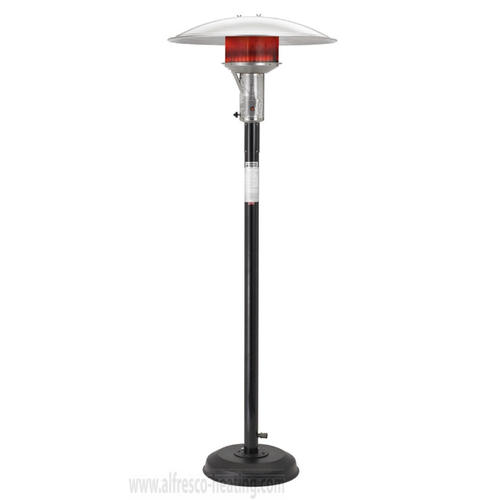
Sunglo A270 Permanent Natural Gas Patio Heater
$389
640+ reviews
A durable 50,000 BTU overhead-mounted heater built for permanent installation and year-round use on covered patios.
Shop on Amazon →Frequently Asked Questions
Do natural gas patio heaters need a dedicated gas line?
Yes, they need a gas supply line run to the location where you plan to use the heater. A licensed plumber installs a shutoff valve and a flex connector at the heater. You cannot use a natural gas heater with a propane tank, and the two fuels are not interchangeable without a conversion kit.
Are natural gas patio heaters cheaper to run than propane?
Generally yes. Natural gas typically costs 30 to 50 percent less per BTU than propane in most regions. The upfront installation cost for running a gas line pays for itself over two or three seasons of regular use compared to buying propane refills.
Can I leave a natural gas patio heater outside in the rain?
Most freestanding natural gas heaters are rated for outdoor use but are not waterproof. Cover them when not in use or in heavy rain. Mounted units like the Bromic Tungsten and Sunglo A270 are designed for permanent outdoor installation and handle weather better than freestanding units.
How much does it cost to run a natural gas patio heater per hour?
A 46,000 BTU heater running on natural gas at average 2026 rates costs roughly 40 to 60 cents per hour depending on your local gas price. Compare that to a propane heater at the same BTU, which runs closer to $1.50 to $2.00 per hour with refill costs factored in.
What is the difference between a mushroom heater and an infrared heater?
Mushroom heaters heat the surrounding air and radiate heat outward from a domed reflector, which works well in calm, open areas. Infrared heaters emit radiant energy that warms objects and people directly, similar to sunlight, making them more effective in breezy or partially enclosed spaces where heated air would escape.