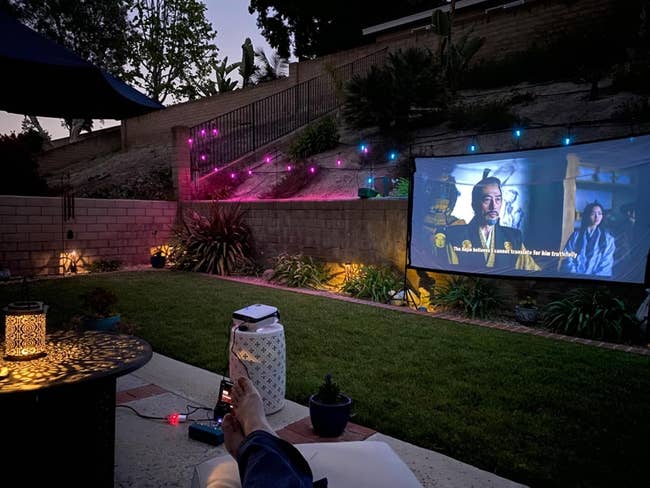
Outdoor Projector vs Outdoor TV: Which Wins?
If you've been staring at your backyard trying to figure out whether to mount a TV or buy a projector, there's no single right answer. It depends on when you watch, how your yard is laid out, and how much you want to spend. But the tradeoffs are clear once you line them up.
Outdoor TVs are bright enough to fight afternoon sun and hold up through rain and humidity without much thought. Projectors give you a dramatically bigger image for less money, but they need darkness to look good and take more effort to set up each time.
This covers both options honestly, with three picks in each category. By the end, you'll know which direction makes sense for your actual setup.
Best Portable Projector for Backyard Movie Nights
The Anker Nebula Capsule 3 Laser is about the size of a large can of coffee, but it throws a sharp 120-inch image from roughly 10 feet back. It runs on its own battery for about 2.5 hours, which covers most movies without running an extension cord across the lawn.
The laser light source keeps colors vivid and the image sharp once the sun drops. You'll want to wait until after golden hour before firing it up, but on a roll-up screen or a light-colored wall it looks genuinely good. Android TV is built in, so you skip the streaming stick.
For a 15x15 foot patio with 6-8 people on lawn chairs or blankets, this is hard to beat at its price. It's also small enough to bring inside or take camping without a second thought.
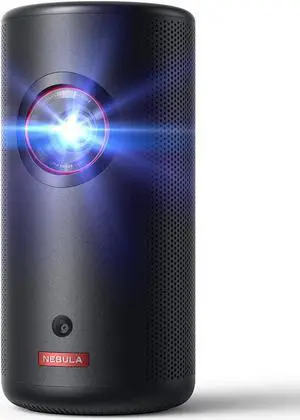
Anker Nebula Capsule 3 Laser Portable Projector
$549
3,200+ reviews
A battery-powered laser projector the size of a soda can that throws a 120-inch image with Android TV built in.
Shop on Amazon →Best Mid-Range Projector for Larger Backyards
The Epson EpiqVision Mini EF21 is worth the step up if you have a bigger yard and want something that stays set up on a shelf without fussing with it every movie night. The laser light source is rated for 20,000 hours, so you're not replacing bulbs every few years.
It puts out 1,000 lumens, which is on the brighter end for a compact projector. It handles early evening light better than most at this size, and the built-in 2.1 channel audio system is genuinely good enough that many people skip the external speaker altogether.
This one shines on a covered patio where you can manage ambient light. For a 20x20 foot outdoor theater setup with a 10-foot screen, it fills the frame cleanly at medium throw distance and the Android TV interface keeps things simple.
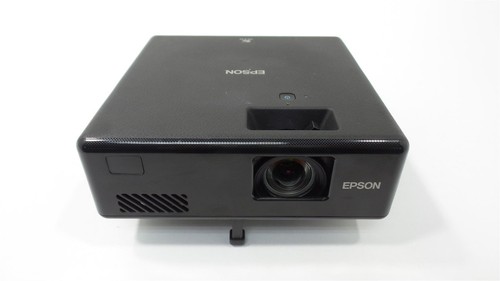
Epson EpiqVision Mini EF21 Smart Streaming Laser Projector
$749
1,800+ reviews
A compact laser projector with 1,000 lumens, Android TV, and a 20,000-hour light source that skips bulb replacements entirely.
Shop on Amazon →Best Smart Projector for Sports Watching After Dark
The BenQ GP20 is built around portability and low-friction setup. Drop it on a table, turn it on, and it auto-focuses and corrects keystone distortion before you've finished pouring a drink. For NFL Sundays or playoff games after dark, the 600 ISO lumen output holds up well on a 100-inch screen.
The cylindrical design doubles as a Bluetooth speaker, which sounds gimmicky until you actually hear it. It's not a replacement for a real outdoor speaker, but for a group of 4-6 people it fills the backyard with enough volume to follow the game. Android TV handles all the streaming.
This is the projector for people who want flexibility above everything else. You can move it from the backyard to the garage to the living room without any real setup time. For a 10x10 covered patio, it's a genuinely complete solution in a single package.
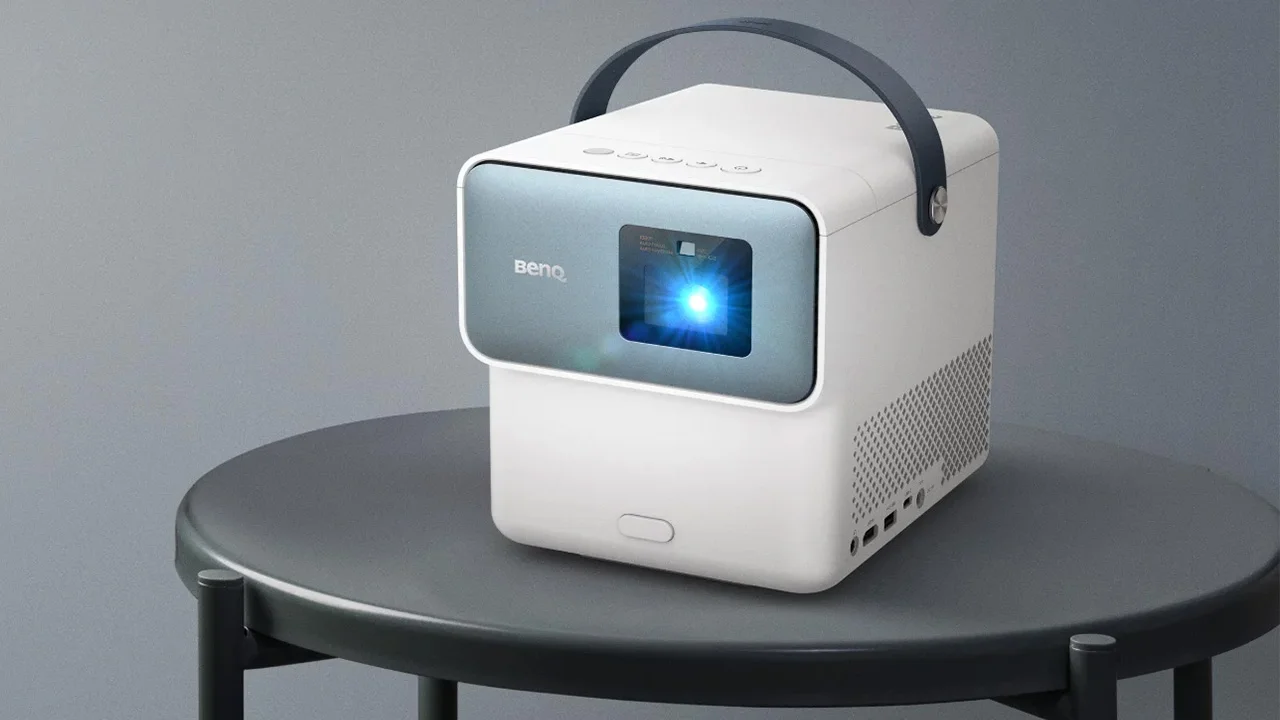
BenQ GP20 Portable Smart Projector
$599
2,100+ reviews
A cylindrical smart projector with auto-focus, built-in Bluetooth speaker, and Android TV that sets up in under a minute.
Shop on Amazon →Best Entry-Level Outdoor TV for Sun-Exposed Patios
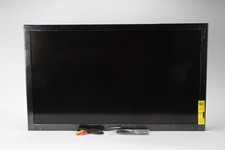
Outdoor TVs are a different animal from projectors. The Furrion Aurora 43-inch outdoor TV pushes 1,000 nits of brightness, which is roughly triple what a standard indoor TV produces. You can watch a game at 2pm on a south-facing patio and actually see what's happening on screen.
The Aurora is rated for rain, humidity, dust, and temperature swings from well below freezing to over 120 degrees Fahrenheit. It stays outside year-round without needing a cover or a cabinet. The 43-inch size is well matched for a covered porch where people sit 8-10 feet away.
This is the most accessible true outdoor TV in this comparison, and it's a solid pick for anyone who wants a set-it-and-forget-it screen. Mount it under a pergola or porch ceiling once and stop thinking about it.
Furrion Aurora 43-Inch 4K UHD Outdoor TV
$799
1,400+ reviews
A weatherproof 43-inch outdoor TV with 1,000 nits of brightness that handles direct sun and lives outside year-round.
Shop on Amazon →Best Mid-Range Outdoor TV for Covered Patios
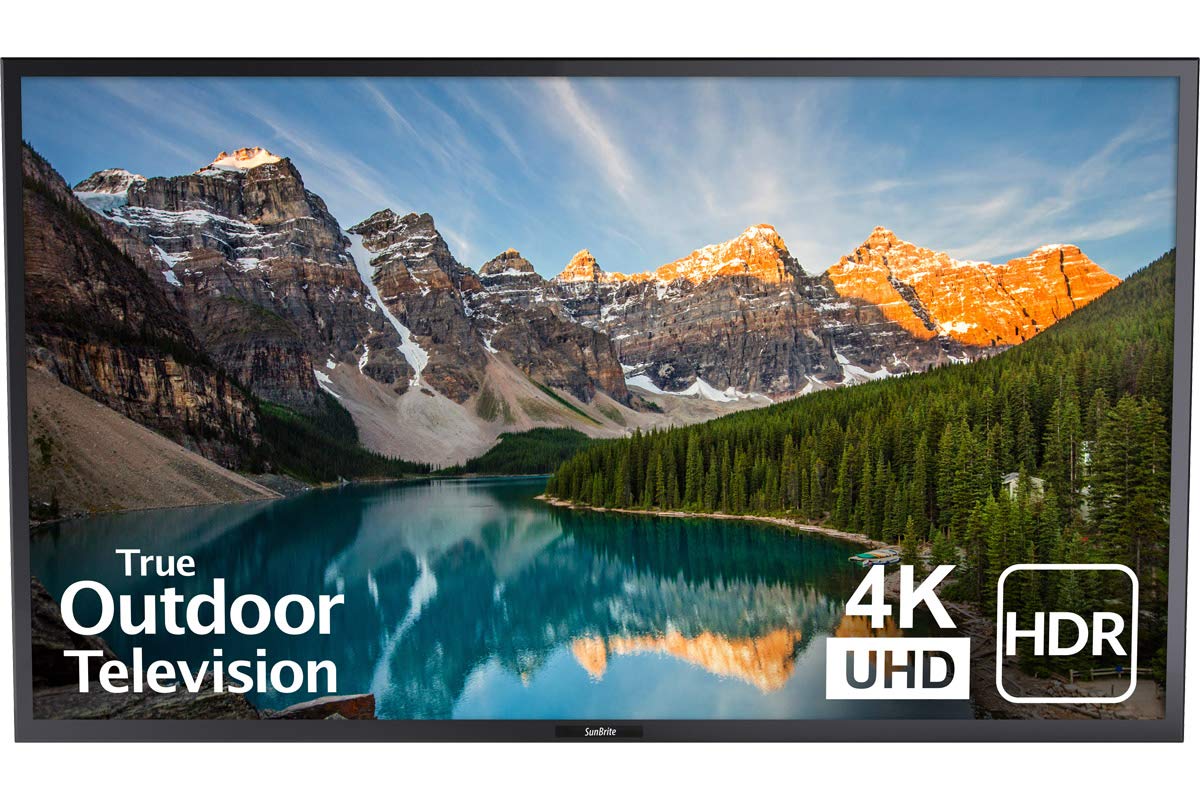
The SunBrite Veranda 2 is the benchmark that most outdoor TV shoppers end up measuring other options against. The 55-inch version delivers 700 nits under partial-shade conditions, and the anti-glare screen coating handles reflections from overhead string lights and porch fixtures better than most.
SunBrite builds these specifically for outdoor use, and it shows in the details. The powder-coated aluminum enclosure carries an IP55 weather resistance rating, handling rain, dust, and humidity without issue. The auto-brightness sensor adjusts the panel as light conditions shift throughout the day.
At 55 inches it works well for groups of 6-10 sitting about 10-14 feet back. The built-in speakers handle casual viewing, though most people at this price point add a soundbar. This is the TV you install and stop thinking about for years.
SunBrite Veranda 2 55-Inch 4K HDR Outdoor TV
$1,499
4,600+ reviews
The most popular mid-range outdoor TV with IP55 weather resistance, 700 nits, and an anti-glare screen made specifically for covered patios.
Shop on Amazon →Best Premium Outdoor TV for Full-Sun Decks
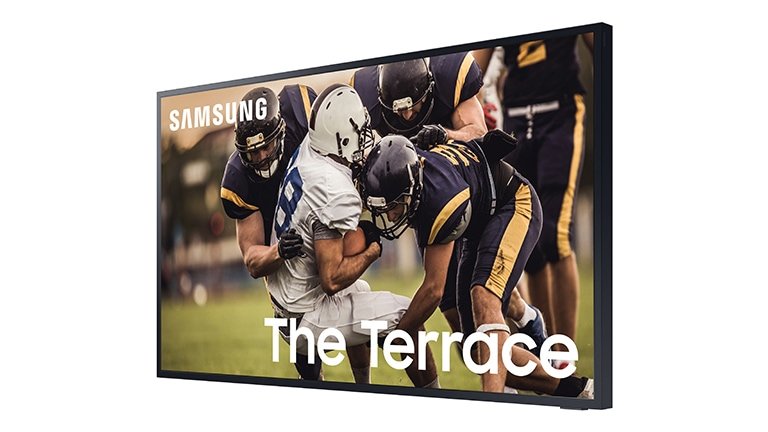
Samsung The Terrace 55-inch QLED outdoor TV is in a different category from everything else on this list. It produces 2,000 nits of brightness, which is enough to watch a movie at noon in direct sunlight without the picture washing out. The QLED panel holds accurate, vivid color at that brightness, which most outdoor TVs cannot claim.
Samsung built it with an IP55 rating and an anti-reflection coating designed specifically for outdoor conditions. The ambient light sensor adjusts brightness and contrast constantly, so the picture looks right whether you're watching at dusk or midday. For a west-facing deck that catches direct afternoon sun, this is the only TV that won't disappoint.
The price is significant, but this is the only product in this comparison that handles daytime sports and evening movies equally well without compromise. If you're building a permanent outdoor living space and want something that's still performing in five years, the investment makes sense.
Samsung The Terrace 55-Inch QLED Outdoor TV
$2,799
5,800+ reviews
Samsung's 2,000-nit QLED outdoor TV with an anti-reflection coating that actually works in direct afternoon sun.
Shop on Amazon →Quick Tips for Choosing Between Outdoor Projector and TV
- Watch time is the deciding factor. If most of your viewing happens after dark, a projector gives you more screen per dollar by a wide margin. If you watch games during the day, a bright outdoor TV is the only thing that actually works.
- Covered vs. exposed changes everything. Projectors need a covered porch or serious shade control to look their best. Outdoor TVs tolerate full exposure, especially models rated for partial or full sun.
- Screen size math is different outside. A 65-inch TV that looks large in a living room feels modest in a 20x30 foot backyard. A 120-inch projector screen is a genuinely better experience for groups sitting on a lawn.
- Budget for a screen if you go projector. Projecting onto a white wall works in a pinch, but a 100-inch pull-down screen adds real sharpness and contrast. Good options start around $100 and make a noticeable difference.
- Outdoor audio is harder than outdoor video. Built-in speakers on both TVs and projectors lose to open air. Budget for a weather-resistant Bluetooth speaker or outdoor soundbar regardless of which display you choose.
- Plan your power and mounting before you buy. Outdoor TVs need a weatherproof outlet near the mount point. Portable projectors run on battery or a short extension cord, which is more flexible if your patio has limited outlets.
Frequently Asked Questions
Can you use a regular indoor TV outside?
A regular indoor TV will typically fail within a season outdoors. Humidity, temperature swings, and insects get into the housing and damage the panel. Use a TV specifically rated for outdoor use, or put it in a fully enclosed and climate-controlled cabinet.
How many lumens does an outdoor projector need?
For after-dark viewing, 500 to 1,000 lumens is plenty. For a covered porch at dusk with some ambient light, aim for 1,000 lumens or more. No projector competes with direct sunlight, which is where outdoor TVs win clearly.
Are outdoor TVs worth the price difference over indoor TVs?
Purpose-built outdoor TVs handle humidity, insects, dust, and temperature extremes from the inside out. They also have anti-glare coatings and far higher peak brightness than indoor panels. You can use an enclosure with an indoor TV, but it adds bulk and cost without solving the brightness problem.
What size screen do I need for a backyard movie night?
For 6 or more people sitting 10 to 15 feet back, a 100-inch screen is the minimum that feels cinematic. A 120-inch screen is better for larger groups. Good pull-down outdoor screens in that range run between $80 and $200.
Do outdoor projectors work with light pollution from street lights and neighbors?
Light pollution affects image quality the same way ambient sunlight does. A brighter projector at 1,000 lumens or above and a high-gain screen help significantly. Darker surrounding surfaces reduce bounce light and improve perceived contrast.