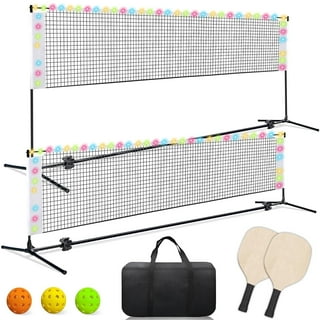
How to Build a Backyard Badminton Court
A dedicated badminton or volleyball court turns a flat backyard into the place everyone actually wants to be all summer. The work is mostly measuring and mowing, not construction.
A regulation badminton court is 44 feet long by 20 feet wide. Volleyball runs 60 by 30. Most standard backyards can fit a recreational badminton court without any real landscaping, which is why this is one of the better summer projects you can finish in a single afternoon.
Here is what you actually need: a net system, a way to mark your lines, quality shuttlecocks, and a decent set of rackets. This guide covers each one, with real picks that hold up through a full season of play.
Best Combo Net for Badminton and Volleyball
The EastPoint Sports Easy Setup Badminton and Volleyball Combo Net is the most practical starting point for most backyards. It sets up in about three minutes, requires no tools, and adjusts between regulation badminton height (5 feet at the center) and recreational volleyball height (roughly 7 feet 11 inches) with a quick adjustment at the pole. For families who want to play both games on the same stretch of grass, this is the right call.
The poles stake directly into the ground, which works well on most lawns. If your yard has firmer or packed soil, bring a rubber mallet to drive the stakes cleanly. The net holds up well to summer weather, but bringing it in during heavy rain extends its life noticeably over a full season. For a family of four playing on a 20 by 44 foot backyard setup, this net earns its keep fast.
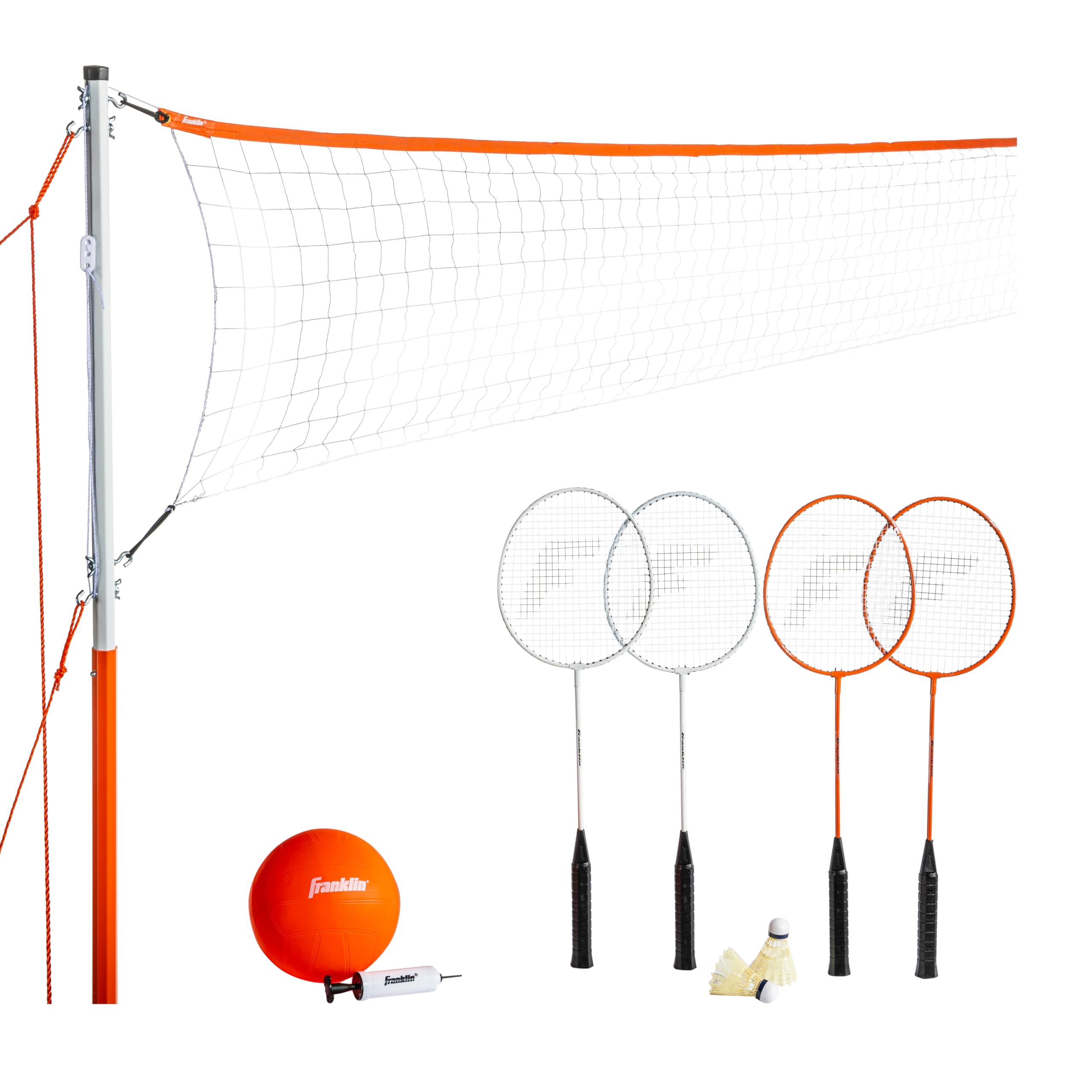
EastPoint Sports Easy Setup Badminton & Volleyball Combo Net Set
$65
3,800+ reviews
Three-minute setup with no tools, adjustable height for both badminton and volleyball, and durable stakes that work in most grass yards.
Shop on Amazon →Best Heavy-Duty Net Posts for a Permanent Court
If you want a court that stays set up all summer instead of getting packed away after every game, the Park and Sun Sports Spectrum Classic Badminton Net System is worth the upgrade. It uses steel poles with a proper pulley and rope tension system, which keeps the net taut and at the right height even after weeks outside. The difference in play quality is real once you have had a floppy net ruin a close rally.
The Spectrum Classic works well for backyards with a dedicated flat area. Stake the poles firmly once at the start of the season and leave them. Families with kids who want daily pickup games without the setup and breakdown routine will get a lot of mileage from this. Plan on a clear footprint of at least 10 by 44 feet, plus room to swing on both sides.
Park & Sun Sports Spectrum Classic Portable Badminton Net System
$95
1,400+ reviews
Steel poles, pulley tension system, and a net that holds regulation height all season without constant readjustment.
Shop on Amazon →Best Boundary Markers for Grass Courts
Painted lines on grass fade in a week and leave dead strips that look rough. Dome cones are a much better solution for a recreational court. The Champion Sports Dome Cones 50-pack gives you more than enough to mark full court boundaries for badminton and volleyball, with extras left over for corner indicators and the service line at mid-court. They are low enough to the ground that nobody trips, and they hold their position even when a stray birdie knocks one.
Set them every five to six feet along the sidelines and every three to four feet along the baselines to give players a clear edge to read during play. Bright orange or yellow are easiest to spot during evening games when the light gets flat. The included mesh bag keeps all 50 together between sessions so none go missing in the garage. If you eventually want something more permanent, use the cones as a template to run a low-profile field-marking spray along the same lines.
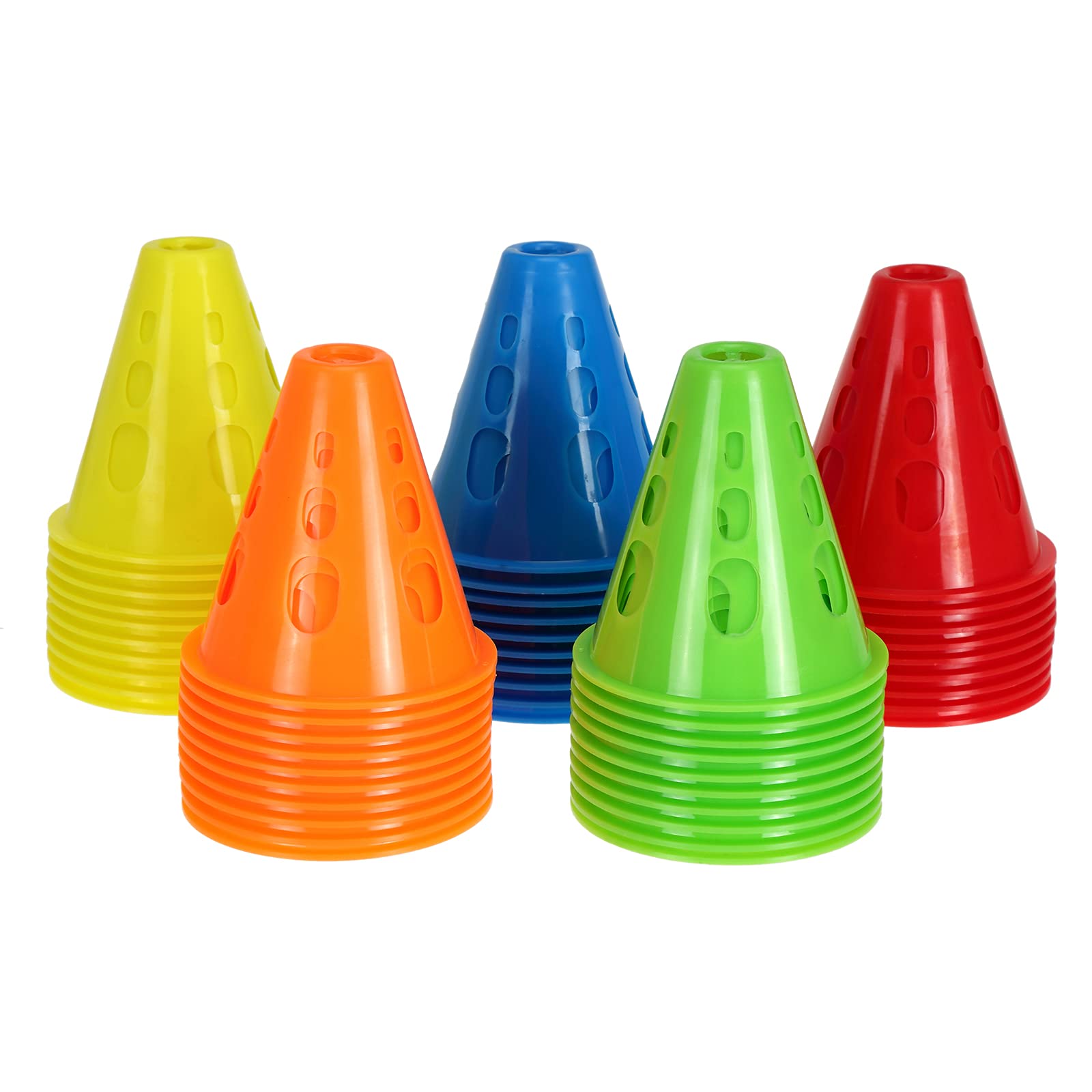
Champion Sports Plastic Dome Cones Set of 50
$22
5,200+ reviews
Low-profile, bright cones that mark court boundaries cleanly without tripping hazards, and they pack into a mesh bag in under a minute.
Shop on Amazon →Best Shuttlecocks for Outdoor Backyard Play
Feather shuttlecocks shred after two backyard games. Nylon is the right choice for outdoor play, and the Yonex Mavis 350 is the standard that most recreational players eventually land on. They fly predictably even in a light afternoon breeze, hold their shape through dozens of sessions, and the flight arc feels much closer to real badminton than the cheap plastic birdies bundled into most combo sets.
The Mavis 350 comes in slow, medium, and fast speeds for different altitudes and temperatures. For most of the US at sea level during summer, medium speed is the right pick. Buy a 6-pack at the start of the season and you will likely still have usable ones come fall. They cost about $2.30 each, which is genuinely cheap for how long they last compared to the alternatives.
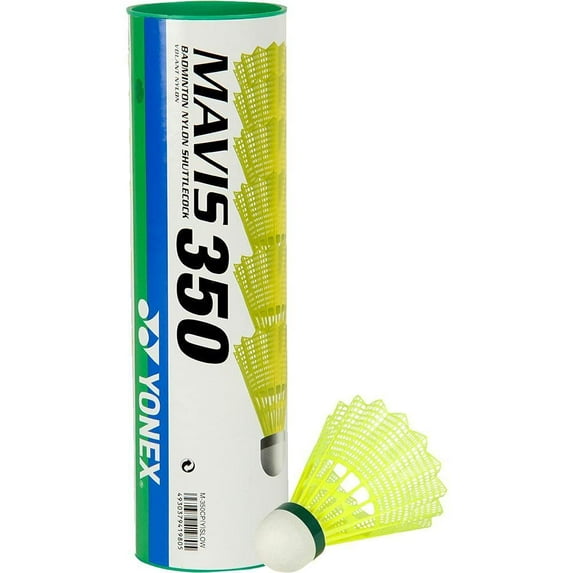
Yonex Mavis 350 Nylon Shuttlecock (6-Pack)
$14
9,100+ reviews
The best outdoor shuttlecock at this price, with consistent flight and durability that outlasts bundled birdies by a wide margin.
Shop on Amazon →Best Racket Set for Family Badminton
A good racket set removes the barrier to just walking outside and playing. The Franklin Sports 4-Player Badminton Racket Set comes with four aluminum rackets and three shuttlecocks, which covers almost every backyard scenario where you have mixed ages and skill levels on the same court. The rackets have enough flex for beginners to control but enough stiffness that they do not feel like toys when a teenager picks one up.
Kids 8 and older can use these comfortably without feeling like they are playing with equipment scaled for adults. The carry bag keeps all four rackets and the birdies together so nothing ends up scattered across the garage before the season is half over. If someone in the house gets serious about badminton, they can upgrade their own racket separately without replacing anything else.
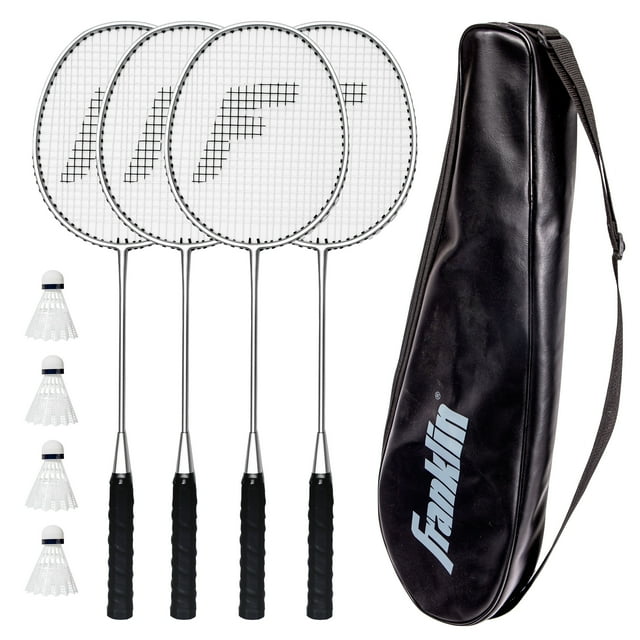
Franklin Sports Badminton Racket and Shuttlecock Set (4 Rackets)
$46
2,600+ reviews
Four solid aluminum rackets with a carry bag that gets four people playing in under five minutes, comfortable for ages 8 and up.
Shop on Amazon →Quick Tips for Setting Up Your Backyard Court
- Mow short before measuring. Tall grass makes it hard to read where cones and stakes land. Cut the court area as short as possible so your measurements are accurate and the playing surface is consistent across the whole court.
- Orient the court north to south. This keeps the sun out of players' eyes during morning and late afternoon games. An east-west court means someone is always serving directly into the sun, which gets frustrating fast.
- Stake your net first, then measure the court outward. The net center point determines everything else. Get the net placed and tensioned correctly, then measure outward to mark your sidelines and baselines. Working in the other direction means more adjusting.
- Check net height at the center and at the posts. Regulation badminton nets sit at 5 feet 1 inch at the posts and 5 feet at the center. Most recreational nets sag slightly under tension. A quick twist of the rope at the post corrects this in under a minute.
- Confirm your court is square with a diagonal measurement. After you place all four corners, measure diagonally from corner to corner. Both diagonal measurements should be equal. If they are not, shift one corner until they match.
- Buy a backup tube of shuttlecocks before the season starts. Nylon birdies last well, but you will go through them faster during active play than you expect. Having a spare set means nobody has to stop the game to hunt down a battered one.
Frequently Asked Questions
How much space do I need for a backyard badminton court?
A doubles court is 44 by 20 feet. Add at least 6 feet on each end and 4 feet on each side for safe play, so plan on a clear area of roughly 56 by 28 feet minimum. Singles play uses a narrower 17-foot width if your space is tight.
Can I use the same net for badminton and volleyball?
Yes, with an adjustable combo net. Badminton nets sit at 5 feet at the center while recreational volleyball height is about 7 feet 11 inches. Most combo systems include a height-adjustment mechanism that handles both without swapping any hardware.
Do I need a perfectly flat yard for a badminton court?
Flat is ideal but a slight grade under 2 percent is fine for recreational play. Anything steeper gives the uphill player a real disadvantage on low shots and drop shots. If your yard has a significant slope, a lawn roller rented for an afternoon can level things out enough to play.
What is the difference between feather and nylon shuttlecocks?
Feather birdies fly more naturally but break quickly outdoors, especially on hard hits and wind. Nylon shuttlecocks like the Yonex Mavis 350 handle outdoor conditions much better and last through many more sessions before needing replacement. For backyard play, nylon is the right choice.
How do I keep the net from sagging through the season?
Tighten the side guy wires or tension rope each time you set up, and check center height after the first rain. Nets stretch slightly when wet and dry out looser than they started. A quick adjustment at the post takes about 30 seconds and keeps the net at the right height for consistent play.